


The Blueprint of the Future: A History of Techno Music
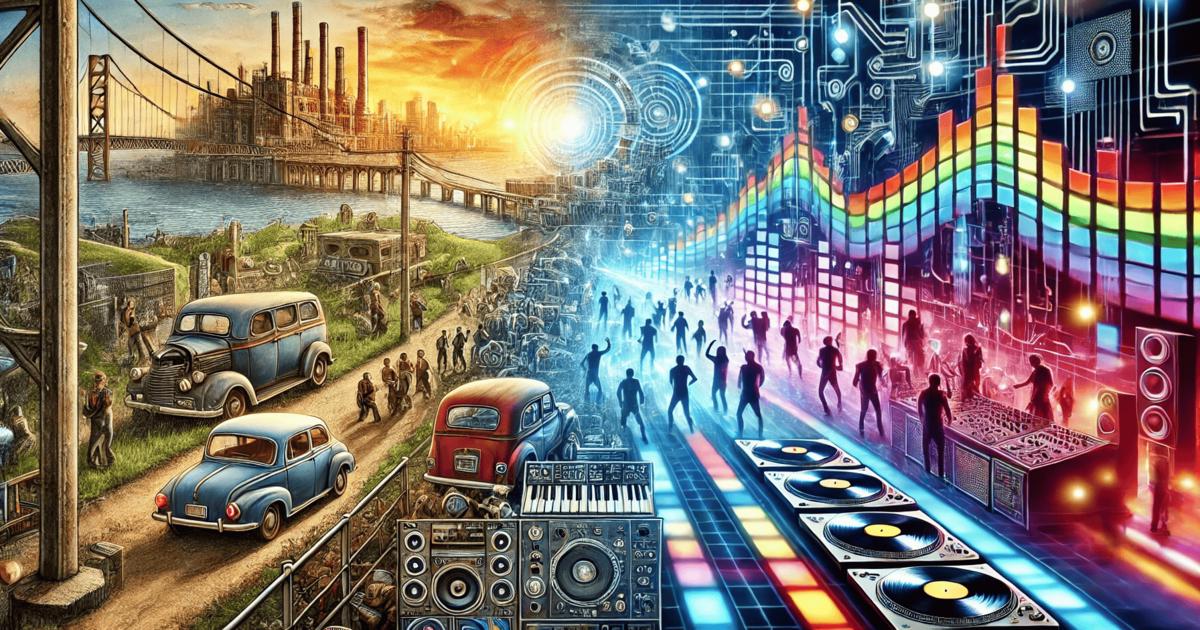
Techno isn’t just a genre; it’s a philosophy of sound. It’s the story of how the industrial pulse of a decaying city met the futuristic dreams of a generation of innovators. As we look back from 2026, techno remains the most forward-thinking force in dance music, constantly shedding its skin while staying true to its mechanical heart.
At djsets.co.uk, our archive is a testament to this evolution. From the raw basement tapes of Detroit to the 4K spatial-audio streams of today, here is the journey of the drum.
1. The Detroit Origins: The "Belleville Three"
Techno was born in the early 1980s in Detroit, Michigan—a city defined by the rhythmic clang of automobile factories and the silence of post-industrial decay.
The sound was pioneered by three high school friends from the suburb of Belleville, now legendary as the Belleville Three:
-
Juan Atkins (The Originator): Often called the "Godfather," he first used the term "techno." His project Cybotron (with Rick Davis) released "Clear" in 1983, a track that laid the blueprint for the genre.
-
Derrick May (The Innovator): His 1987 masterpiece "Strings of Life" brought soul and classical strings to the machine, famously described as "George Clinton and Kraftwerk caught in an elevator."
-
Kevin Saunderson (The Elevator): He brought techno to the masses through his project Inner City, producing global hits like "Big Fun" and "Good Life."
2. The European Connection: Berlin and Beyond
While Detroit created the sound, Europe—specifically Berlin—provided the sanctuary. Following the fall of the Berlin Wall in 1989, abandoned bunkers and power plants became the home of a new, harder sound.
-
The Axis of Sound: A unique cultural exchange began between Detroit and Berlin. Labels like Tresor and Hardwax became the bridges that allowed techno to grow into a global movement.
-
UK Influence: In the early 90s, the UK added its own flavour with the "Bleep Techno" of Sheffield and the industrial grit of Regis and Surgeon in Birmingham.
3. Subgenres: The Fragmentation of the Beat
As the 90s progressed, techno began to split into specialised territories, many of which are seeing a massive resurgence in 2026:
| Subgenre | The Vibe | Key Pioneer |
| Minimal | Stripped back, focus on subtle textures and precision. | Robert Hood / Richie Hawtin |
| Acid | Defined by the "squelch" of the Roland TB-303. | Plastikman (Richie Hawtin) |
| Dub Techno | Atmospheric, delay-heavy, and deep. | Basic Channel |
| Industrial | Raw, distorted, and relentlessly high-energy. | Underground Resistance / Jeff Mills |
4. Techno in 2026: The "Neo-Rave" Renaissance
As of March 2026, we are witnessing a "full-circle" moment.
-
The Return of Speed: The 130 BPM standard of the 2010s has been pushed aside. 2026 is the year of 145+ BPM, as techno merges with trance and neo-rave elements.
-
The Hybrid Booth: DJs are no longer just "mixing." With 2026 tech, artists like Ki/Ki and Maddix are using AI-assisted live stems to deconstruct and rebuild tracks in real-time.
-
Spatial Immersion: Venues like UNVRS in Ibiza have turned the techno experience into a 3D soundscape, where the kick drum literally moves through the crowd.
The Soul of the Machine
Techno’s enduring power lies in its lack of ego. It is often faceless, focused entirely on the collective experience of the dancefloor. Whether it’s a grainy recording of a 1988 set at The Music Institute or a 2026 livestream from Berghain, the mission remains the same: Escape into the future.
